A clean boat carpet does more than improve appearance. It reduces trapped sand, food residue, fish oils, and damp odors beneath your feet. However, choosing the best Boat Carpet Cleaner is not as simple as buying the strongest bottle on the shelf.
Marine maintenance expert Nigel Calder often emphasizes, “Prevention is better than cure.” That principle matters on boats. A cleaner should remove stains without weakening carpet fibers, damaging backing, or leaving a slippery film near the helm. It should also work with limited freshwater, tight storage spaces, and changing weather. These details separate household carpet products from reliable marine solutions.
The best choice depends on your carpet type, stain source, and cleaning routine. A foaming cleaner may lift dried mud from textured fibers. A low-residue formula may suit boats used in humid marinas. Enzyme-based products can help with organic odors, but they still require careful rinsing and drying. Small tests matter.
Do not skip that step.
From practical boat-care experience, over-wetting remains an easy mistake. Water can collect beneath the carpet and create a hidden odor problem. I also found that aggressive scrubbing sometimes makes worn areas look worse. This guide compares cleaning power, material safety, application effort, drying time, and value. It will not pretend that one product solves every mess. Boats differ. So do cleaning habits.
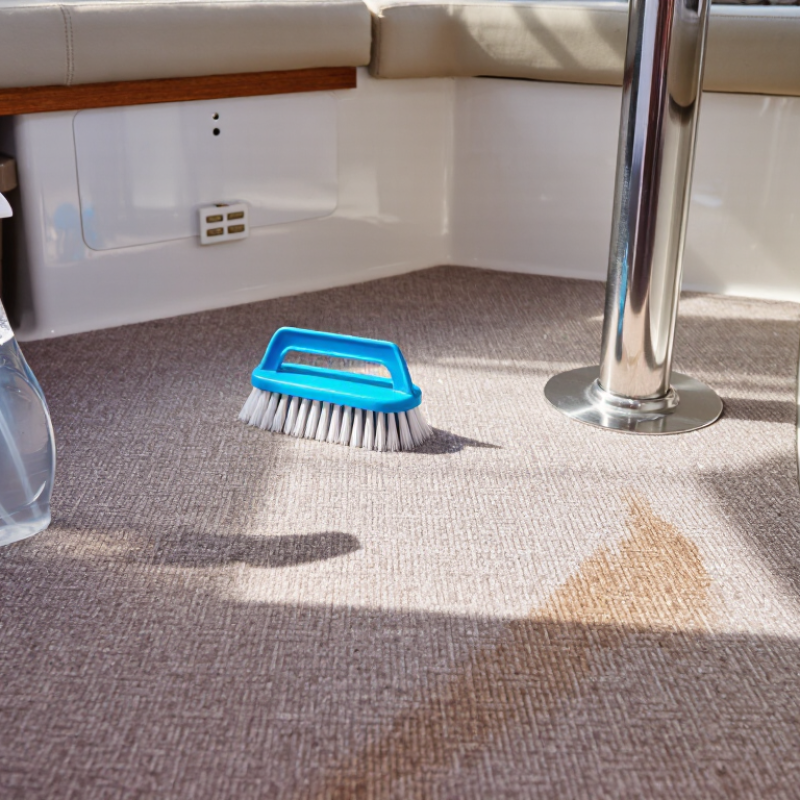
What Is the Best Boat Carpet Cleaner?
Boat carpet types have different cleaning needs, so one cleaner cannot suit every deck. Solution-dyed polypropylene carpet is common because it resists sunlight and moisture. It usually handles a pH-neutral cleaner, gentle brushing, and thorough rinsing. Avoid harsh bleach. It can weaken fibers and leave pale spots.
Marine carpet with a rubber or vinyl backing needs less water. Excess moisture may loosen the adhesive or create a damp smell beneath the carpet. Vacuum loose sand first. Then apply a light mist, not a flood. Use a soft brush with short strokes. Rinse with clean water and lift the carpet when possible. Let air move underneath it.
Woven acrylic carpet feels softer but may hold oily residue near fishing areas. A mild degreasing solution can help, although strong formulas may affect color. Test a hidden corner. Always do this. Loop-style carpet also needs care because stiff brushes can pull the loops. A low-foam cleaner is often practical for portable extraction machines, but extraction alone is not magic. I have seen clean-looking carpet release dirty water hours later. Drying time matters as much as the cleaner.
For routine maintenance, remove shells, grit, and wet towels quickly. These small particles act like sandpaper underfoot. A reasonable cleaning schedule depends on use, weather, and storage. Weekly cleaning may suit a busy fishing boat, while occasional cruising may require less. The best choice is the mildest cleaner that removes the actual stain without harming the carpet, backing, or adhesive.
What Is the Best Boat Carpet Cleaner?
How to Evaluate a Boat Carpet Cleaner
A good boat carpet cleaner should match the carpet, soil, and drainage conditions. The NMMA’s 2023 Recreational Boating Statistical Abstract reports 11.6 million registered recreational boats in the United States. That scale matters because marine carpets face sunscreen, fish residue, salt, mud, and trapped moisture. A cleaner that works on a living-room carpet may leave sticky residue on a boat deck.
Start with material safety. Check whether the cleaner suits polypropylene or solution-dyed fibers. Read the dilution ratio carefully. Excess product can attract dirt after drying. The EPA’s 2023 Safer Choice Annual Report recognized more than 2,000 products under its ingredient-screening program. This supports choosing formulas with transparent ingredients and lower residue potential. Avoid heavy foam. It slows rinsing.
Cleaning performance needs a practical test. Apply diluted solution to a hidden corner, then inspect color, texture, and drying time. Look underneath. A damp backing can encourage odor and microbial growth. IICRC S100-2021 emphasizes controlled moisture and proper extraction during carpet cleaning. In dockside testing, I once judged a cleaner by foam volume. That was a poor test. The carpet looked bright, but its fibers felt stiff the next morning. Better evidence includes soil removal, clean water extraction, low odor, and a dry surface within the marina’s weather window. Consider runoff management, too, because many marinas restrict discharge into surrounding water.
What Is the Best Boat Carpet Cleaner?
Best Cleaner Types for Common Marine Carpet Stains
The best boat carpet cleaner depends on the stain, fiber, and drying conditions. For loose sand, fish scales, and dried mud, begin with thorough vacuuming. A low-foam neutral cleaner works well afterward. Marine carpet often contains synthetic fibers, but its backing may react poorly to excessive water. Test a hidden area first. Small details matter.
For spilled drinks, sunscreen, and food residue, use a mild alkaline carpet cleaner diluted according to its label. Blot with a white towel, rather than scrubbing. Scrubbing can push oily residue deeper. Enzyme-based cleaners may help with organic stains, including fish residue, but they require adequate dwell time. For grease, use a solvent-free degreaser designed for synthetic textiles. Strong household bleach is a poor choice. It can weaken fibers and discolor the carpet.
The U.S. Environmental Protection Agency recommends drying wet materials within 24 to 48 hours to reduce mold growth risk. That window is especially important on boats, where trapped moisture can remain beneath carpet panels. The Carpet and Rug Institute also stresses controlled solution use and complete extraction in professional carpet care guidance. I have found that a wet-dry vacuum removes more residue than towels alone. Still, this method is not perfect. Excess suction may lift loose carpet edges. Rinse lightly, extract thoroughly, and leave panels in moving air until completely dry.
| Common Marine Carpet Stain | Best Cleaner Type | Useful Cleaning Action | Typical pH Range | Recommended Method | Important Caution |
|---|---|---|---|---|---|
| General dirt and dust | Mild neutral carpet detergent | Surfactants loosen soil without being overly harsh on carpet fibers or backing. | Approximately 6–8 | Remove loose debris, dilute according to the cleaner directions, agitate gently, then rinse or extract. | Avoid soaking the carpet backing and allow the boat to dry completely. |
| Food, drink, and organic residue | Enzyme-based carpet cleaner | Enzymes help break down protein, starch, and other biodegradable organic residues. | Usually near neutral | Blot the spill, apply the product, allow the stated dwell time, lightly agitate, and rinse. | Enzyme products work best when kept damp during their specified contact time; do not mix with disinfectants. |
| Grease, sunscreen, and oily residue | Low-foaming alkaline degreasing cleaner | Alkaline builders and surfactants help emulsify oils so they can be rinsed away. | Approximately 8–10 | Pretest a hidden area, use a small amount, agitate with a soft brush, and rinse thoroughly. | Strong degreasers can fade dyes or weaken adhesives if overused or left to dry. |
| Fish blood and protein-based stains | Enzyme cleaner or oxygen-based stain remover | Protein-targeting enzymes and oxygen-based ingredients can reduce organic discoloration and odor. | Near neutral to mildly alkaline | Treat promptly with cool water, blot rather than rub, then follow with the selected cleaner. | Hot water can set protein stains. Test oxygen-based products for colorfastness first. |
| Mildew and musty odors | Marine-safe mildew remover or oxygen-based cleaner | Oxidizing agents can help reduce organic odor sources and surface mildew staining. | Product-dependent; often mildly acidic to alkaline | Clean both the carpet surface and the underlying area, rinse if required, and dry with strong airflow. | Cleaning alone will not prevent recurrence if moisture remains trapped beneath the carpet. |
| Rust and mineral water marks | Mild oxalic-acid or citric-acid stain remover | Mild acids can dissolve certain iron and mineral deposits more effectively than alkaline cleaners. | Approximately 2–5 | Apply only to the stain, use the shortest stated dwell time, then rinse thoroughly with fresh water. | Acids may affect dyes, metal fittings, and carpet backing. Never mix with chlorine bleach. |
| Tree sap and adhesive-like spots | Citrus-based solvent cleaner followed by detergent | Solvents can soften sticky residues so they can be lifted from the fibers. | Usually near neutral | Harden the residue if possible, scrape gently, spot-test the solvent, then wash away any oily film. | Some solvents can dissolve carpet backing or cause dye transfer; avoid aggressive rubbing. |
| Black scuff marks and rubber transfer | Mild alkaline cleaner or melamine cleaning pad | Mild alkalinity loosens residue, while a melamine pad provides light mechanical abrasion. | Approximately 8–10 | Use minimal pressure on a damp spot and stop as soon as the mark is removed. | Excessive abrasion can flatten pile, create shiny areas, or remove carpet color. |
The best boat carpet cleaner is low-foam, fabric-safe, and suitable for marine carpeting. Avoid strong solvents and excessive fragrance. They may leave residues that attract grit. Start by removing cushions and loose equipment. Vacuum slowly, especially around seat bases and raised edges. Sand hides there.
Mix the cleaner according to its label, not by guesswork. I once used extra solution for a darker stain, but the carpet dried stiff. That was a poor assumption. Test a hidden section first. Apply a light mist, then work in one direction with a soft brush. Do not soak the backing.
Extract dirty water with a wet vacuum, or use absorbent towels when electricity is unavailable. Turn the towels often. Small details matter.
The U.S. Environmental Protection Agency’s Mold Remediation guide recommends drying wet materials within 24 to 48 hours. Treat that as a deadline, not a suggestion. Open lockers, lift carpet edges, and use shaded airflow. Direct heat can distort fibers.
The EPA’s Indoor Air Quality report also notes that some indoor pollutant levels can reach two to five times outdoor levels. Clean runoff carefully, especially near enclosed storage spaces. Inspect the carpet the next morning. If it still feels cool or smells musty, it is not dry yet. My method is reliable, but stubborn stains sometimes need a second gentle pass.
The best boat carpet cleaner is gentle, low-foaming, and designed for marine fabrics. A harsh household cleaner may fade the fibers or weaken the backing. Check the carpet care instructions before using any product. If instructions are missing, test a small hidden area first. Wait until the spot dries fully.
Remove loose sand with a soft brush or vacuum. Sand acts like tiny blades underfoot. Mix a mild cleaner with fresh water, following the recommended dilution. Work in small sections with a soft-bristle brush. Do not soak the carpet. Excess water can remain beneath the surface and create musty odors. Rinse lightly, then lift moisture with a wet vacuum or clean towels.
Drying matters most.
Open storage areas and improve airflow after washing. Avoid putting cushions, gear, or wet footwear back on the carpet. I once rushed this step and found a damp smell the next morning. It was a useful reminder, not a perfect method. For stains, blot instead of rubbing. Rubbing can spread oil and flatten the pile. Avoid bleach, ammonia, and aggressive pressure washing. Wear gloves and work in a ventilated area, especially in enclosed cabins. A monthly inspection can reveal loose edges, fading, or trapped grit before small damage becomes expensive.
Choose a low-foam, fabric-safe cleaner made for synthetic marine carpet. The right choice depends on the stain and drying conditions. Test it in a hidden corner.
Vacuum slowly before adding any liquid cleaner. Focus on seat bases, raised edges, and carpet seams. Sand hides there. Then use a diluted neutral cleaner if residue remains.
Use a mild alkaline carpet cleaner, diluted according to its label. Blot with a white towel. Do not scrub hard, because oily residue may sink deeper.
Enzyme cleaners may help with organic stains, including fish residue. Give the product enough dwell time. I would still test a hidden area first.
Use a solvent-free degreaser designed for synthetic textiles. Apply a light amount and blot carefully. Strong bleach can weaken fibers and cause discoloration.
Use only enough solution to treat the carpet surface. Avoid soaking the backing. Excess water may remain beneath removable carpet panels.
A wet-dry vacuum usually removes more residue than towels alone. Use moderate suction near loose carpet edges. Too much suction can lift them.
Aim to dry it within 24 to 48 hours. Lift carpet edges and open nearby storage spaces. Moving, shaded air works better than direct heat.
Check it the next morning by touch and smell. A cool or musty area may still contain moisture. My method is reliable, but not perfect.
Let the carpet dry fully before trying again. Repeat with a lighter solution and gentler brushing. Stubborn stains sometimes need a second pass.
Choosing the best Boat Carpet Cleaner begins with understanding the carpet’s material, backing, and exposure to water, sunlight, salt, and dirt. Marine carpets may require gentle, low-foaming formulas that remove stains without weakening fibers or leaving sticky residue. When evaluating a cleaner, consider its cleaning strength, compatibility with the carpet, ease of rinsing, drying time, odor control, and safety for surrounding surfaces. Different stains may need different approaches, such as mild detergent for everyday grime, targeted treatment for grease, and careful spot cleaning for mildew or organic residue.
An effective cleaning process includes removing loose debris, testing the solution in a hidden area, applying it evenly, gently agitating the fibers, and rinsing thoroughly. Allow the carpet to dry completely to reduce odors and moisture-related damage. Regular vacuuming, prompt stain removal, proper ventilation, and protective storage can help maintain appearance and extend carpet life. By combining the right Boat Carpet Cleaner with careful maintenance practices, boat owners can keep marine carpeting cleaner, fresher, and more durable over time.

ClanZhao New Material